
Masonry restoration
Restore an aging retaining wall or other masonry structure that has been damaged by Spokane's winters rather than tearing it out completely.
Learn more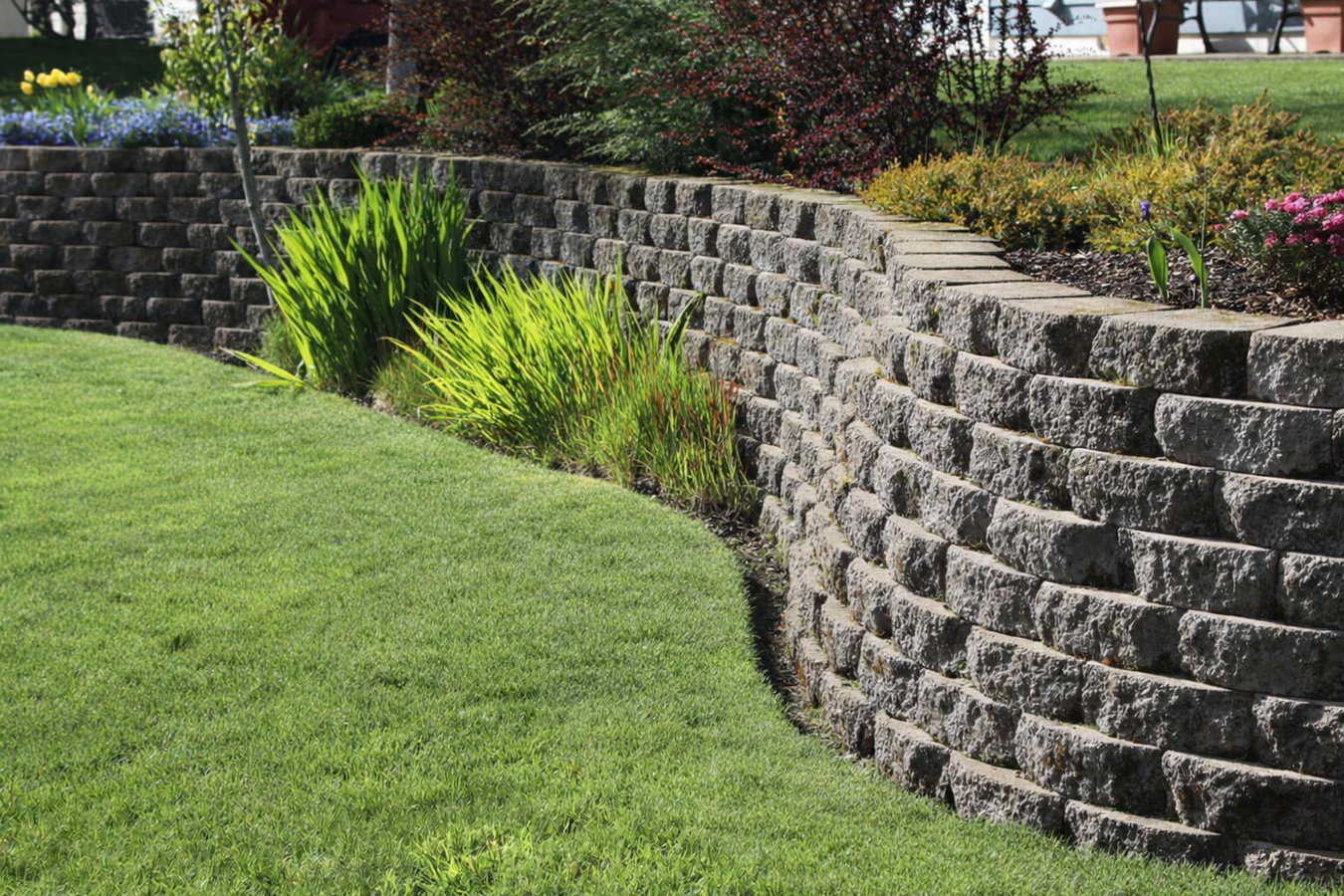
Watching your slope wash away every spring is a problem that gets worse, not better, on its own. A properly built retaining wall with the right drainage stops erosion and keeps your yard, foundation, and landscape in place through Spokane winters.
Retaining wall construction in Spokane holds back soil on sloped or uneven lots so the ground stays where it belongs - most residential projects take one to three days once permits are in place and the site is ready for excavation. The wall creates a permanent boundary between your slope and the rest of your yard, protecting your foundation, landscaping, and structures from soil movement and erosion.
Without a wall, a hillside loses soil a little more after every Spokane spring thaw - slowly at first, then faster as the slope destabilizes. Soil that washes toward your home can saturate the ground around your foundation and lead to water intrusion. Homeowners who also need to address the exterior masonry on their property often pair retaining wall work with masonry restoration when older walls or structures are involved.
The USDA Natural Resources Conservation Service identifies soil erosion on residential slopes as one of the most common and preventable property damage issues in the Pacific Northwest. A properly built wall with adequate drainage is the standard solution - and the drainage design is what determines whether the wall holds up or eventually fails.
If bare patches are appearing on a hillside in your yard, or soil is washing onto your driveway or sidewalk after Spokane's spring rains, your slope is actively eroding. Left alone, this process speeds up each year and can eventually undermine nearby structures or your home's foundation. A retaining wall stops erosion at the source rather than just cleaning up the mess after each storm.
A wall that is no longer perfectly vertical - even slightly - is telling you the soil pressure behind it is winning. Horizontal cracks running across the face are a particularly serious sign, because they often mean the wall is beginning to separate under load. In Spokane's climate, a wall that has started to lean will almost always get worse after the next hard freeze.
If water collects near your foundation after a heavy rain rather than draining away from the house, a slope or grade problem is likely directing it there. A retaining wall combined with proper regrading can redirect water away from your home, protecting your foundation and reducing the risk of a wet basement. This is one of the most common reasons Spokane homeowners on the South Hill call a masonry contractor.
When the ground beneath a fence or set of outdoor steps starts to move, the structures sitting on top of it move too. Tilting fence posts and shifting stone or concrete steps are often early signs of soil instability on a slope - the kind of problem a retaining wall addresses at the root cause rather than just resetting the fence posts temporarily.
Most residential retaining walls in Spokane are built from concrete block or segmental retaining wall units - materials that handle freeze-thaw movement without cracking and can be configured to almost any height and length. The base goes below the frost line, drainage gravel is packed behind every course as the wall goes up, and weep holes or perforated pipe provide a clear exit path for water so pressure never has a chance to build. For properties where the wall will be a prominent visual feature, natural stone is a durable and attractive option that fits well with the older home styles common across the South Hill and Browne's Addition.
Some projects involve replacing a wall that has already started to fail. We assess whether the existing structure is repairable before recommending removal - sometimes the base and drainage are still sound and the wall itself just needs attention. Homeowners dealing with a failing wall often benefit from also addressing the broader masonry on their property, which is where concrete block walls for property division or additional structural support might be part of the same project scope.
Best for homeowners who want a durable, long-lasting wall at a reasonable cost - concrete block handles Spokane's freeze-thaw cycles well and can be built to almost any height.
Best for properties where the wall will be highly visible and the homeowner wants a look that fits an older or more traditional home style.
Best for walls in the three-to-six-foot range where a clean, uniform appearance is a priority and the project does not require custom engineering.
Best for homeowners with an existing wall that is leaning, cracking, or has failed drainage - we assess whether repair is possible before recommending full replacement.
Spokane sits in a climate zone where temperatures swing above and below freezing dozens of times each winter. That repeated movement causes the ground to expand and contract, and any wall footing that was not set deep enough will slowly shift with it. Spokane's frost line is roughly 24 inches, which is the minimum depth a footing needs to reach to stay stable. Many older retaining walls in established neighborhoods like South Hill, Browne's Addition, and Cliff-Cannon were built before this standard was widely followed - which is why so many of them are leaning now.
Spokane's loess soils - the fine, silty material deposited across the basin by ancient floods - become unstable when saturated and erode more easily than the dense soils found in other regions. This makes drainage behind a retaining wall more critical here than in most other Pacific Northwest cities. Homeowners in Spokane and Pullman deal with very similar soil conditions - the Palouse region is built on the same loess formation, and proper drainage design is non-negotiable for walls in both areas.
Tell us roughly how long the wall needs to be, how tall the slope is, and what is happening now - erosion, leaning wall, water intrusion, or all three. We respond within 1 business day and schedule an on-site visit.
We walk your property, measure the slope, assess soil conditions and drainage, and tell you upfront whether a permit is required. You receive a written estimate that itemizes materials, labor, drainage, and permit fees before you commit to anything.
If a permit is required for your wall height, we submit the application to the City of Spokane and wait for approval - typically one to three weeks. We also call 811 before any digging begins so underground lines are marked and the crew knows where not to dig.
We excavate the site, prepare a compacted base set below Spokane's frost line, and build the wall up course by course with drainage gravel packed behind each layer. A properly drained wall is what makes it stand straight ten winters from now.
We respond within 1 business day and provide written estimates before any work begins. No pressure, no obligation.
(509) 418-9962Spokane's frost line sits at roughly 24 inches, and any wall footing above that depth will shift when the ground freezes and thaws each winter. Every retaining wall we build is set with the base below that threshold, which is the foundation - literally - of why the wall stays plumb for decades.
The most common reason retaining walls fail is water pressure building up behind them with nowhere to go. We pack drainage gravel behind each course as we build and install drainage pipes or weep holes so water exits the wall rather than loading it. In Spokane's wet springs, this is not optional - it is the difference between a wall that holds and one that leans.
We have pulled retaining wall permits through the City of Spokane for projects across the South Hill, Browne's Addition, and Cliff-Cannon neighborhoods - areas with some of the oldest failing walls in the city. We know the process, handle the paperwork, and keep you updated on the timeline so you are not chasing the city for status updates.
Your estimate breaks out materials, labor, drainage work, and permit fees before a single shovel goes in the ground. If something unexpected shows up during excavation - an old buried wall, unusual soil, or unmarked utilities - you hear about it before work continues, not after the invoice arrives.
The National Concrete Masonry Association publishes design standards for segmental retaining walls that specify drainage requirements, base depth, and batter angles - the technical details that separate a wall that holds from one that does not. Those standards inform every wall we build, regardless of size, and any qualified retaining wall contractor working in Spokane's climate should be able to explain how they apply to your specific project.
Restore an aging retaining wall or other masonry structure that has been damaged by Spokane's winters rather than tearing it out completely.
Learn moreFree-standing concrete block walls for property division, privacy, or structural support alongside or separate from slope retention.
Learn moreRetaining wall crews book up fast once the ground thaws in Spokane - reach out now to secure your spot on the schedule.