
Chimney repair
Tuckpointing, cap replacement, liner repair, and crown sealing to keep your chimney safe through Spokane's winters.
Learn more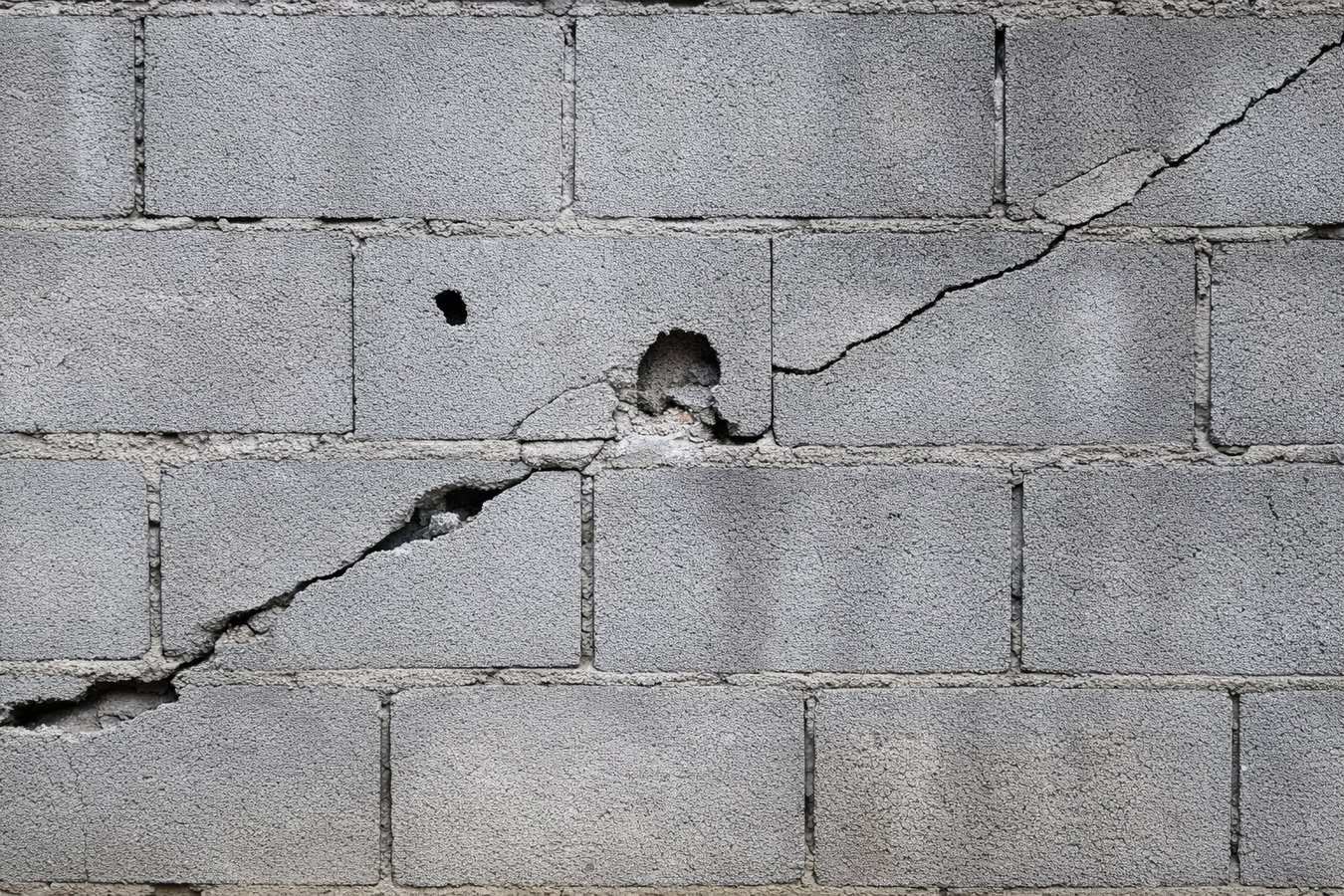
Cracks, settling, and shifting foundations are common in Spokane homes. Our licensed masonry team diagnoses the cause and fixes it right, with city permits and written warranties.
Foundation repair in Spokane stabilizes or restores the structural base that holds your home up - most jobs take one to three days and can be done while you stay in the house. Contractors diagnose why the foundation moved or cracked, then use targeted methods to stop further movement and, where possible, lift the structure back toward its original position.
Spokane homeowners deal with a specific combination of challenges: the loess soil that underlies much of the city compresses when wet and shrinks when dry, and the freeze-thaw cycle from November through March pushes and pulls at foundation walls dozens of times each season. If you are already seeing sticking doors or cracks in your walls, our chimney repair team can also inspect the rest of your masonry while we are on site.
The goal of foundation repair is not cosmetic. It is to protect the long-term safety and value of your home. Addressing movement early almost always costs less than waiting until the damage is extensive. Washington State requires a building permit for structural foundation work, which means a city inspector will review the job - a layer of protection that works in your favor. Learn more from InterNACHI about foundation issues.
If a door that used to swing freely now drags on the floor, or a window that opened easily now jams, your home's frame may be shifting. In Spokane, this symptom often appears in late spring after the ground absorbs snowmelt and settles unevenly. It does not always mean a serious problem, but it is worth having someone look before the next freeze-thaw season.
Hairline cracks in concrete are common and often harmless, but cracks you can fit a pencil tip into - especially ones wider at one end than the other - suggest active movement. Spokane's loess soil can shift gradually under a home over many years. Diagonal cracks running from the corners of windows or doors are a classic sign of differential settling.
Stand in the middle of a room and see if a ball would roll on its own. A floor that slopes more than an inch over ten feet is a sign that part of the foundation has settled more than the rest. This is one of the most common complaints in Spokane's older South Hill and Garland District neighborhoods, where homes sit on decades-old foundations over loess soil.
Standing water against your foundation walls after heavy rain or during Spokane's spring melt season puts pressure on concrete and saturates the soil beneath your home. Over time, this is one of the most reliable predictors of foundation movement. Persistent water pooling is reason enough to have the drainage and foundation evaluated.
Every foundation problem is different, which is why we offer a range of repair methods rather than a one-size-fits-all approach. For homes with active cracks or water intrusion, we use targeted crack repair techniques to seal the damage and stop moisture from getting deeper into the structure. For homes with significant settling - especially in Spokane neighborhoods where older foundations sit on loess soil - we install steel or concrete pier systems that transfer the home's weight past the unstable soil down to bedrock or dense soil that will not shift.
Homes built in the 1920s through 1960s frequently have concrete block foundations that were poured with shallower footings than current standards require. Our foundation block wall installation service addresses failing or inadequate block foundation walls. Every repair we carry out is permitted and inspected through the City of Spokane Building Services.
Best for homes with active cracks that are widening or showing moisture intrusion.
Best for homes with significant settling where the foundation needs to be stabilized or lifted.
Best for slab-on-grade homes where voids have formed beneath the concrete.
Best for older homes with block foundations that are bowing, cracking, or failing at the mortar joints.
Spokane sits in a climate zone where ground temperatures regularly drop below freezing from November through March, and the soil freezes and thaws repeatedly throughout that period. Every time the soil freezes it expands slightly and pushes against foundation walls. Every time it thaws it contracts and pulls back. Over years, that repeated movement is one of the leading causes of foundation cracking and settling in Spokane homes - and local contractors are very familiar with it. Much of the city also sits on loess, a fine wind-deposited soil that compresses under load when it gets saturated, causing uneven settling that differs from what homeowners in western Washington typically encounter. Homeowners in Spokane and Spokane Valley should have their foundations evaluated if they notice symptoms, especially after a hard winter or a wet spring.
A significant portion of Spokane's residential neighborhoods - including South Hill, Browne's Addition, and the North Side - contain homes built in the 1920s through 1960s. Foundations from that era were often poured with less reinforcement and shallower footings than what is required today, making them more vulnerable to the soil and climate conditions described above. Washington State requires a permit for structural foundation work in Spokane, meaning the repair is inspected by a city official after completion. That is a protection for the homeowner, not just a bureaucratic step.
We ask a few basic questions about your home's age and symptoms. Most inspections can be scheduled within a few business days. Call before spring when wait times are shortest.
We walk the exterior, inspect the interior walls and floors, and examine the basement or crawl space. The pattern of cracks and floor slope tells us what is causing the movement.
You receive a written estimate explaining what work is proposed, why, and what it will cost. We handle the city permit application and include the fee - you do not navigate that process yourself.
Most residential jobs take one to three days. After the work is done, a city inspector verifies the repair meets Spokane's building standards. We schedule that inspection, not you.
We respond to all estimate requests within 1 business day. No obligation, no hard sell - just an honest assessment of what your Spokane home needs.
(509) 418-9962Spokane's loess soil compresses when wet and pulls away when dry. We design every repair around that specific behavior, not just the visible damage. That is why our repairs continue to hold through multiple freeze-thaw seasons.
Structural foundation work in Spokane requires a city permit. We pull the permit, communicate with the city, and schedule the final inspection. Homeowners never have to navigate building services on their own.
You can verify our contractor registration with the Washington State Department of Labor and Industries in two minutes at no cost. That registration is the legal minimum for structural work in this state, and we maintain it.
Many Spokane homes were built in the 1920s through 1960s on shallower footings than current standards require. We specialize in these homes and give you a straight assessment of what the foundation actually needs, not the most expensive option.
Every one of these commitments shows up in how we work, not just in what we say. When we leave your property, the repair is documented, permitted, and built to handle what Spokane's soil and winters will throw at it. Verify any Washington contractor's license at the L&I website.
Tuckpointing, cap replacement, liner repair, and crown sealing to keep your chimney safe through Spokane's winters.
Learn moreNew concrete block foundation walls for additions, garages, and structures that need a solid footing in Spokane's freeze-prone ground.
Learn moreSpokane's freeze-thaw season starts earlier than most homeowners expect. Lock in your repair date now so your home is protected before the ground freezes.